IdentN728HWSample aircraft
Your airplane, by its number
You know it by the avgas on a cold preflight and the number you say on every call. We paint it in one of twelve traditions of aviation art and set that number large under the picture, so anyone who walks into the hangar knows whose airplane it is.

One photograph of it
The whole airplane in frame, on the ramp or in the hangar door. The painting is made over your own picture, so the lines, the livery and the registration come from your photograph, and only the sky, the light and the painter’s hand change. Looking is free. You pay when one deserves a wall.
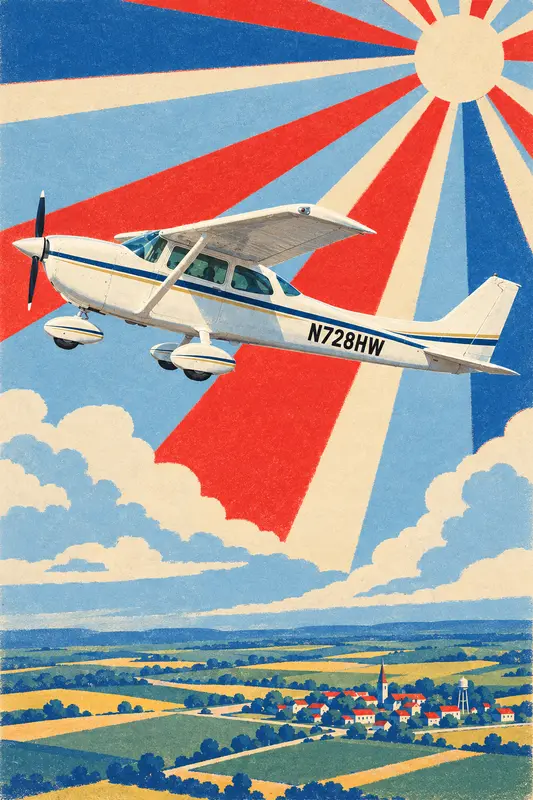
Airmail Poster 1931
Your aircraft, flying the mail in 1931
Four passes on the house. A pass paints it twice: the upright and the wide. Your photograph goes to the engine twice, once per shape, and is not kept. Every style comes back twice, the upright and the wide, and you choose at the till. Warbirds yes; serving military, wrecks and faces no. The FAQ says why.
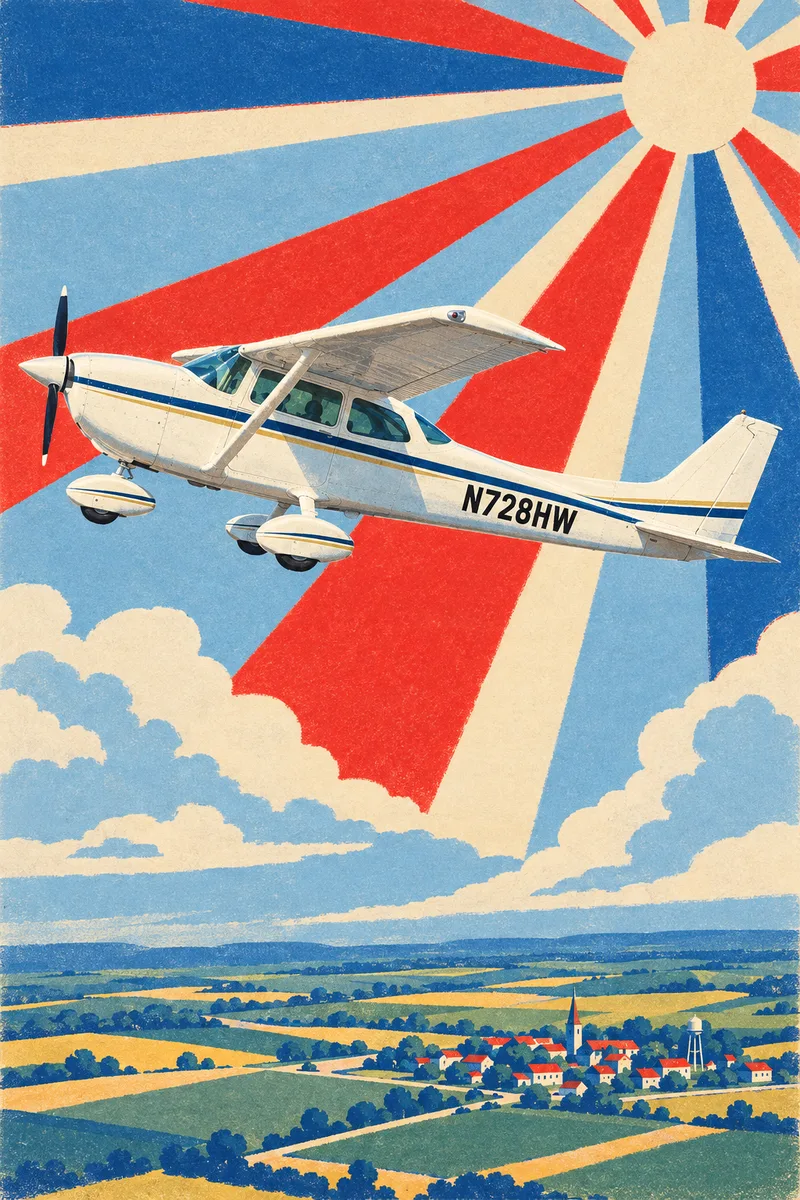
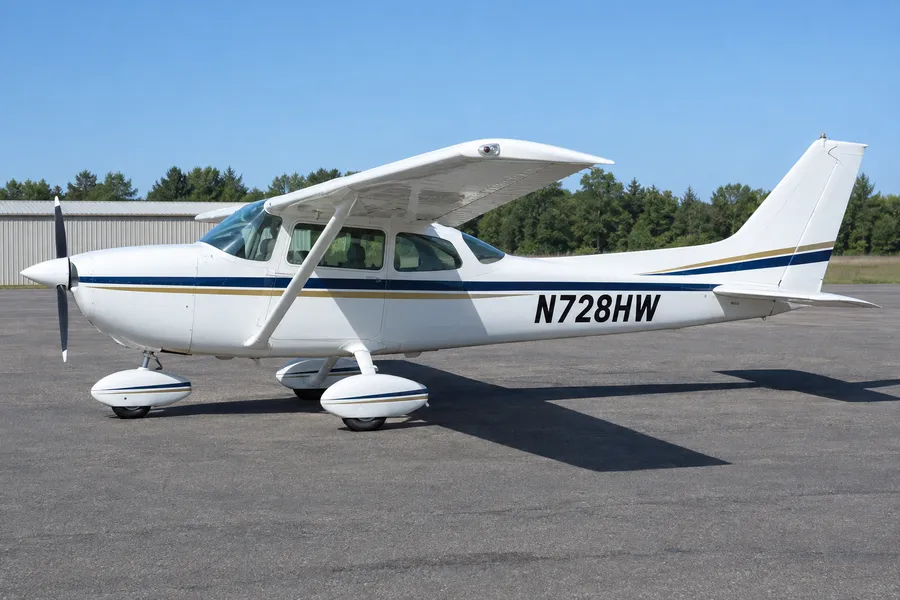
Airmail Poster 1931
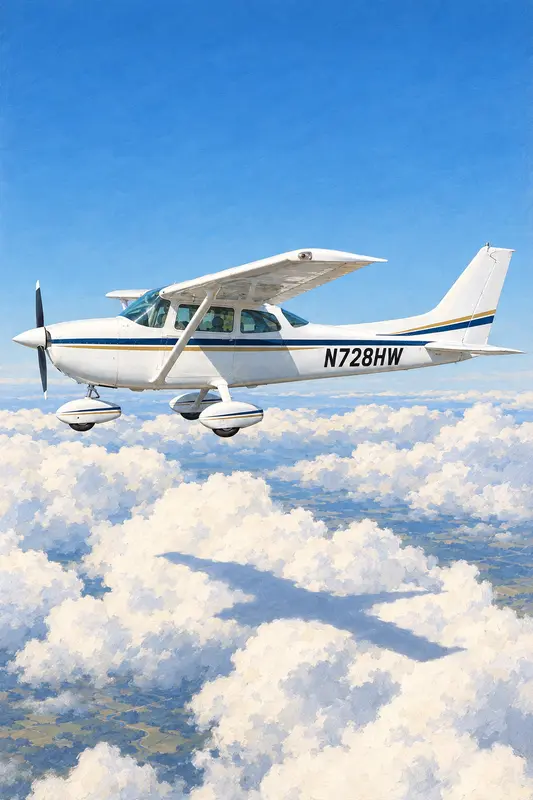
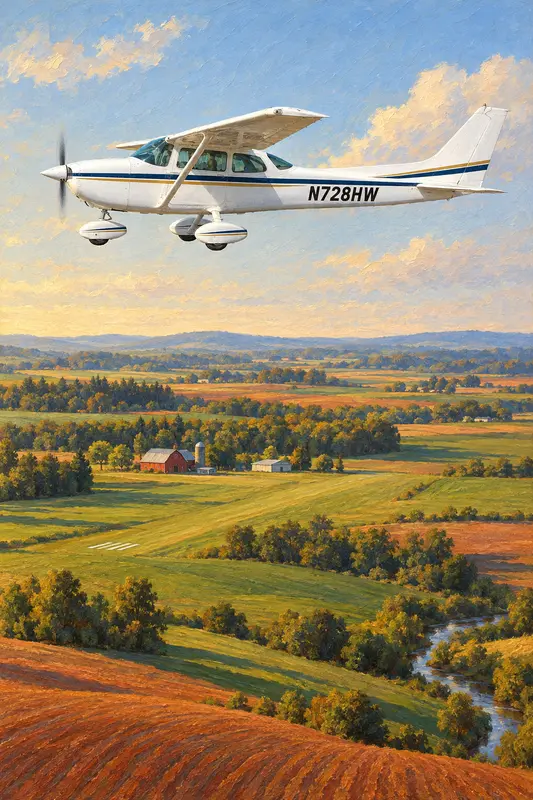
The sample high-wing, painted by the same engine. Yours takes its place.
One aircraft, the whole airframe in frame. Your own, or one you have the right to photograph.
The register line
Named the way the register names it
Under the registration goes the aircraft type, the model and the year the FAA register holds for that number, in the same face. A 1976 F33A reads Fixed Wing Single-engine · F33A · 1976. On the Pilots of America forum, one owner put the reason in a line: “The paint colors were different, but he recognized the tail number.”
The register also lists the owner’s name and address. Those rows are never read here. The maker’s name never sets either: the badge on the cowling stays as a shape, with no letters in it. How the line is read.
Four wings
The twelve styles
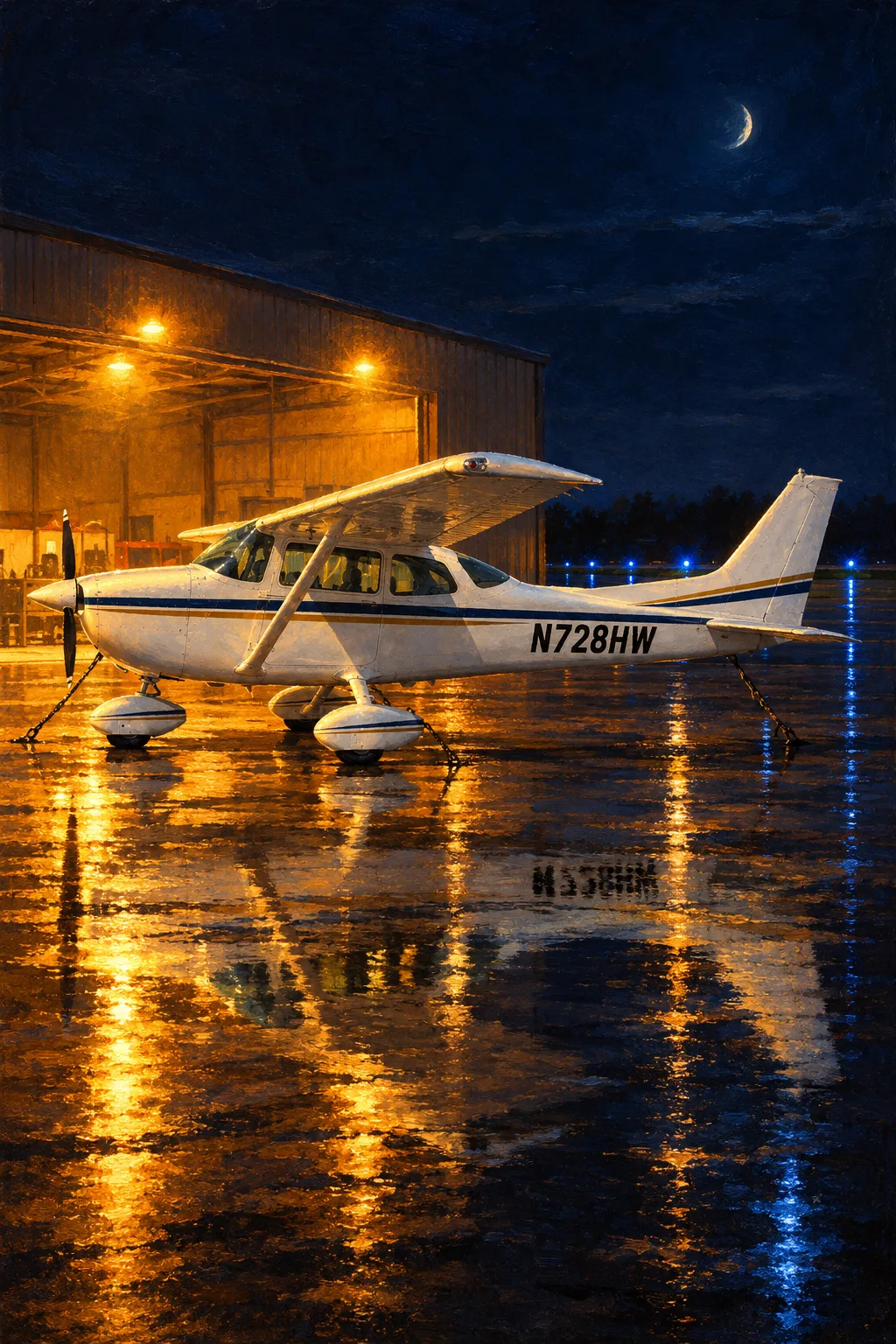
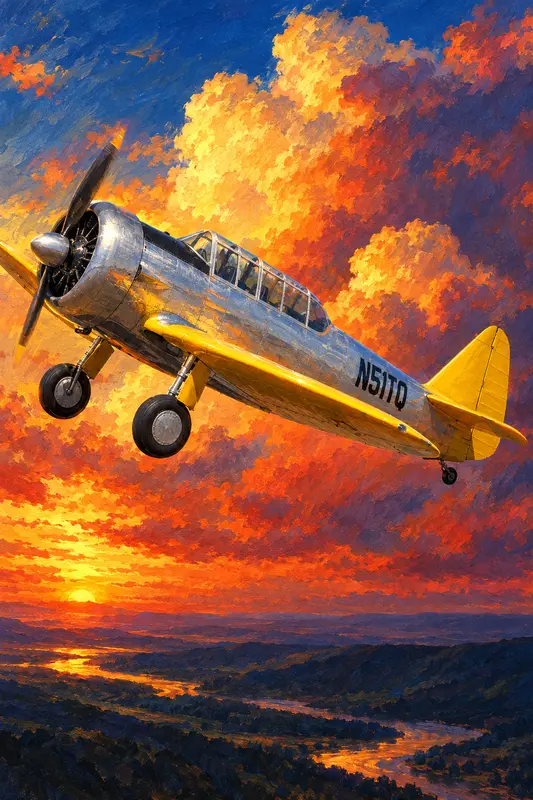
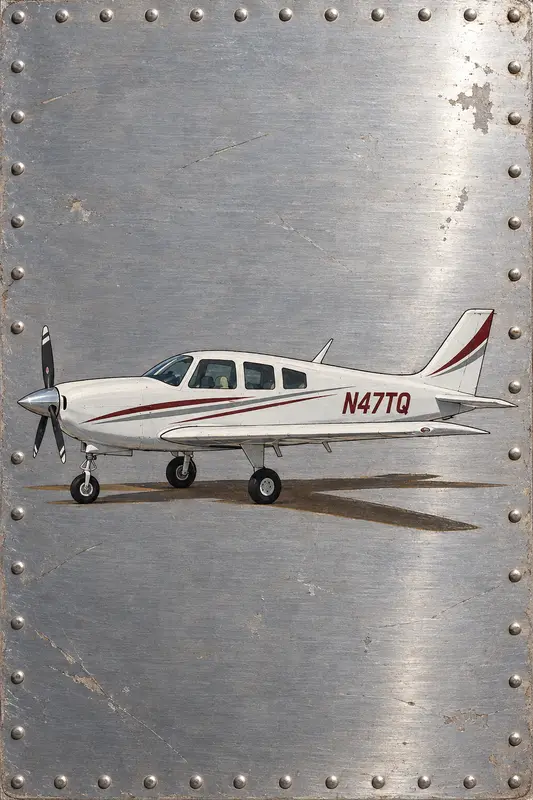
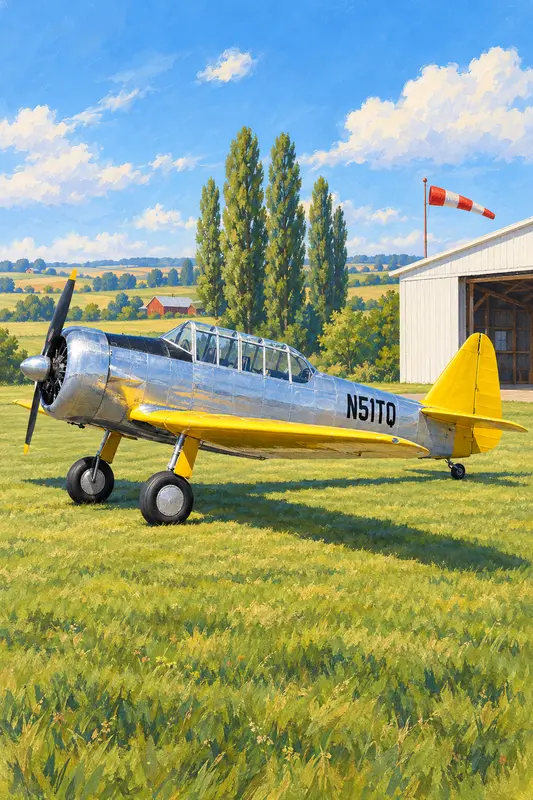
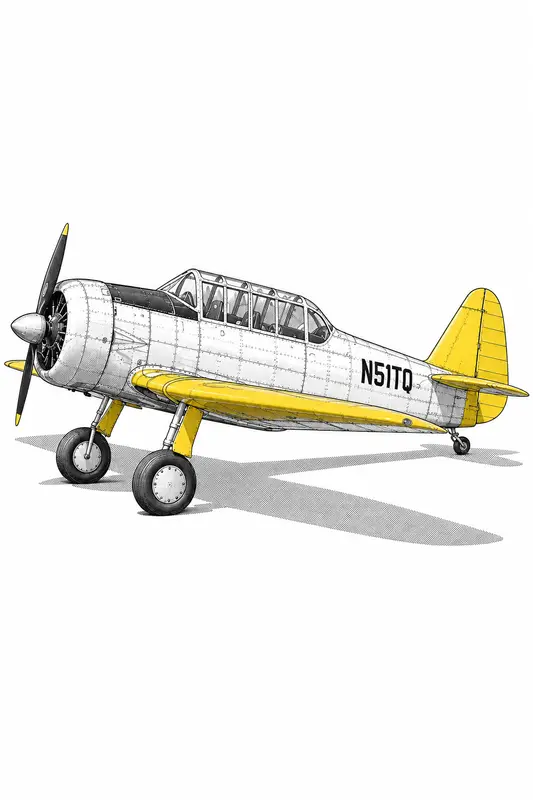
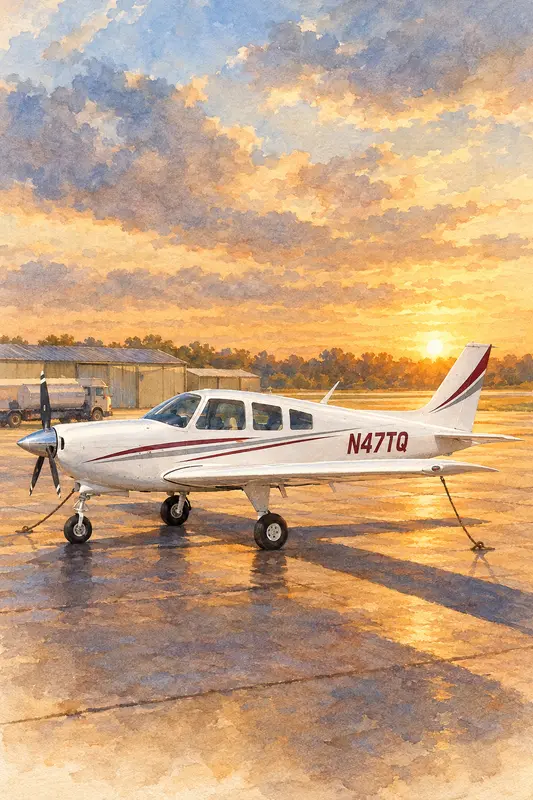
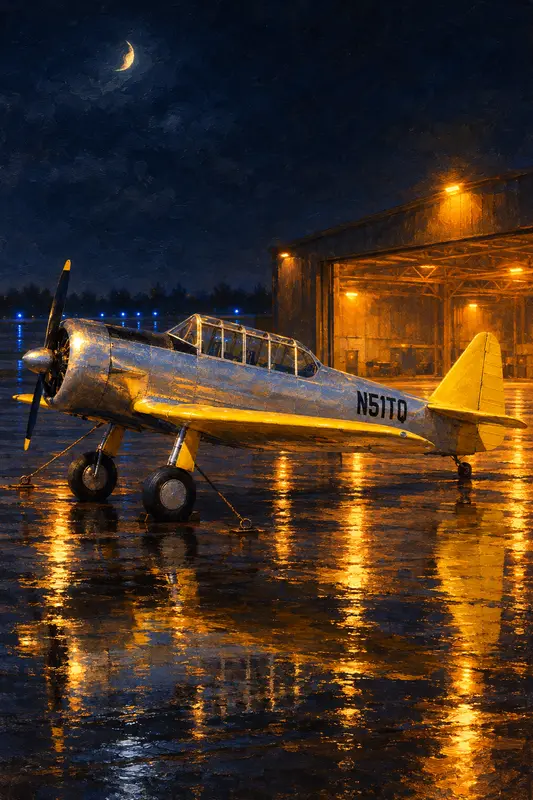
Walked in order: the airmail posters and Deco airlines of the golden age, the war and record years, the drawing office and the approach plate, then the painters of home fields and the night ramp. Three sample aircraft sit for the wall, a high-wing, a low-wing and a warbird, so you can watch the style change and the airplane stay.
The Golden Age
The airmail poster, the airline poster in Art Deco, and the pulp cover painted for the newsstand.
The War and Record Years
Gouache illustration of the 1940s, the squadron painter’s enamel panel, and the airfield painting fuel companies commissioned.
The Technical
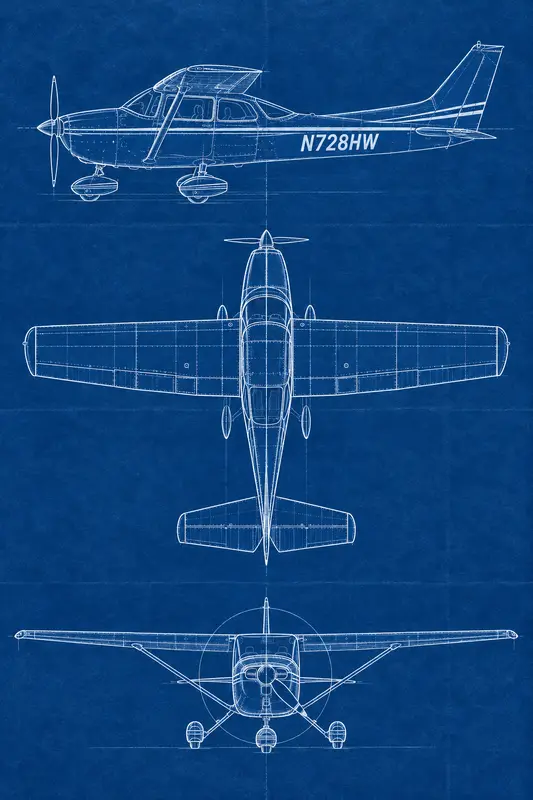
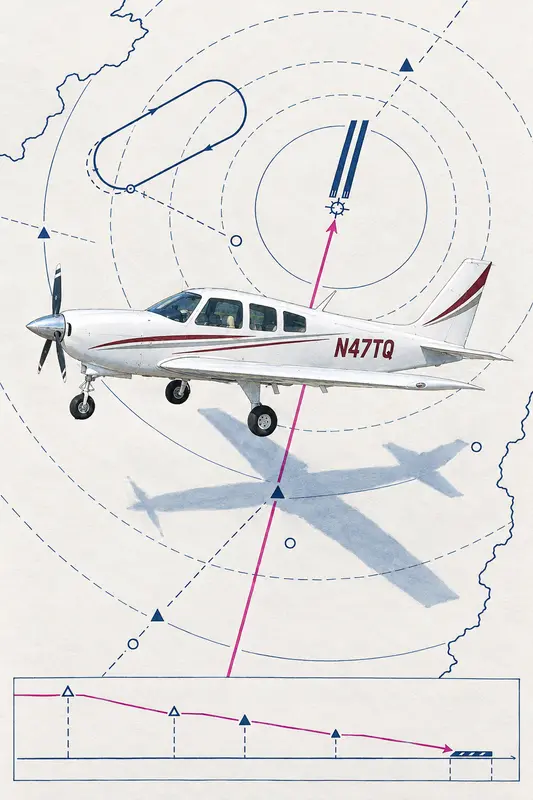
The three-view in white line on blue, the approach plate drawn as a shape, and the flight-manual line drawing.
The Painterly
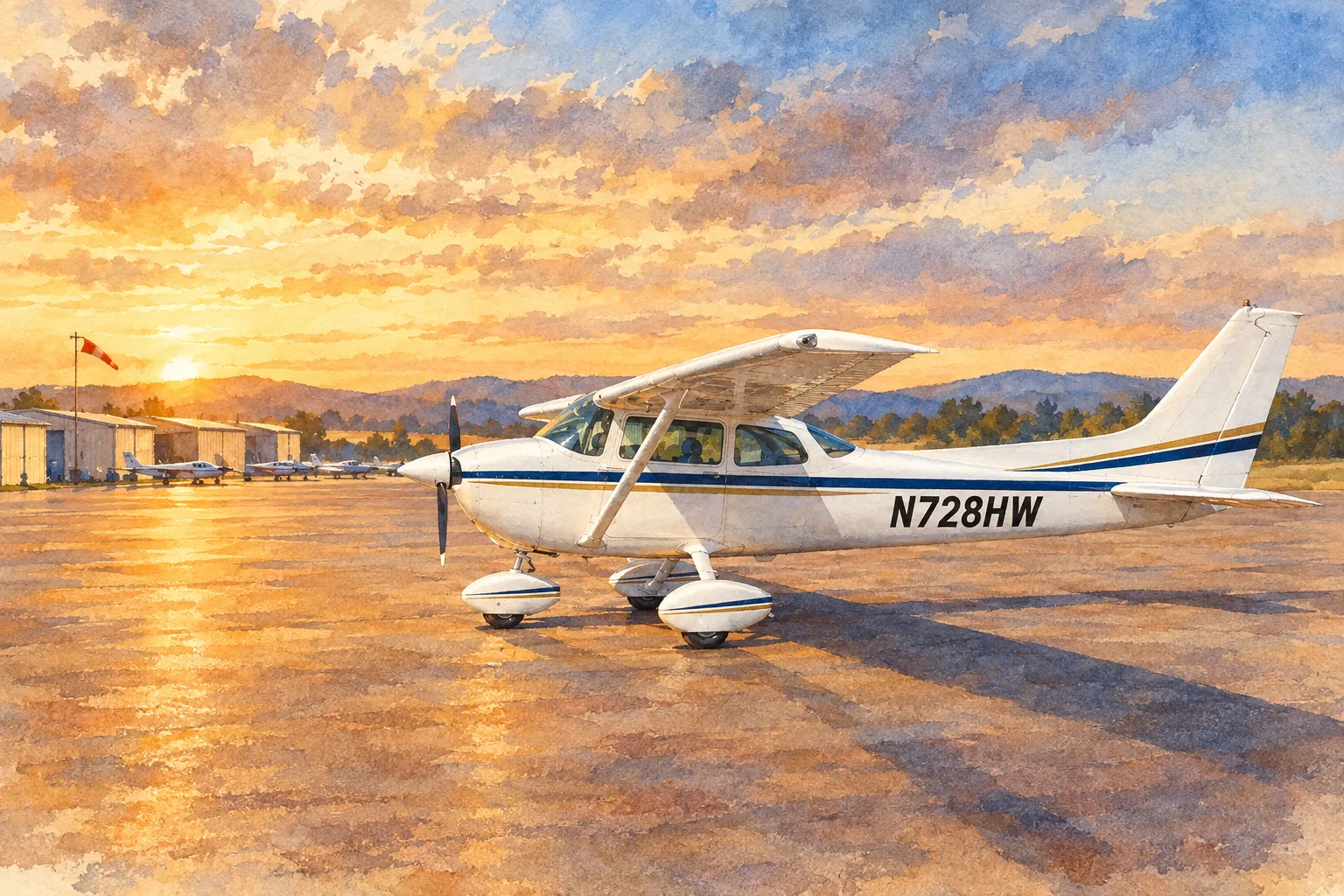
Oil over the fields of its home airport, watercolour on the ramp at golden hour, and the night ramp under hangar light.
Wide, with the weather
The upright puts the airplane on a tall sheet. The wide gives it the ramp and the sky around it: same airplane, same style, side-on. Three of the twelve, dealt fresh for every visit.
Three of eighty-eight. Every style has its still, and the toggle above the picker renders yours.
Photograph in, painting out
- 01One photograph. The whole airplane in frame, side-on or from the quarter, in daylight. A phone photo is fine. A ramp full of airplanes is not: one gets picked, and it may not be yours.
- 02One style. The recipe that painted the sample aircraft on the wall runs on yours. The prompt is built on the server, so what comes back is the style you chose.
- 03About ninety seconds. The upright lands at 1024 × 1536 and the wide at 1536 × 1024. Keep it as a file, or buy it as a print up to 40 × 60″, rebuilt at print resolution the moment you pay.
- 04The number and its line. The type desk sets the registration under the painting and the register’s line under that, in the lettering of the period. The painting itself carries no words but the registration already on the airplane. Skip the desk and it prints bare.
The wall pieces
Hang it large
Enhanced matte, Hahnemühle Photo Rag, canvas on a 38mm stretcher, or canvas in a black float frame. Printed by the nearest print house and shipped to one hundred and twenty-one countries at a flat postage by size.
For the club wall
A flight school sends a student off with a cut shirttail and a date. A club keeps its fleet on the clubhouse wall. Both are the same job here: one photograph of each airplane, one style for the set, every number set the same way.
What still misses
Some renders put an antenna in the wrong place, draw a strut twice, or add a wheel fairing the airplane never had. A registration can come back with a letter wrong, which is the one mistake a pilot sees from across the room.
That is why looking is free and every render is yours to refuse. Check the number before you buy. Only the one you chose is printed.